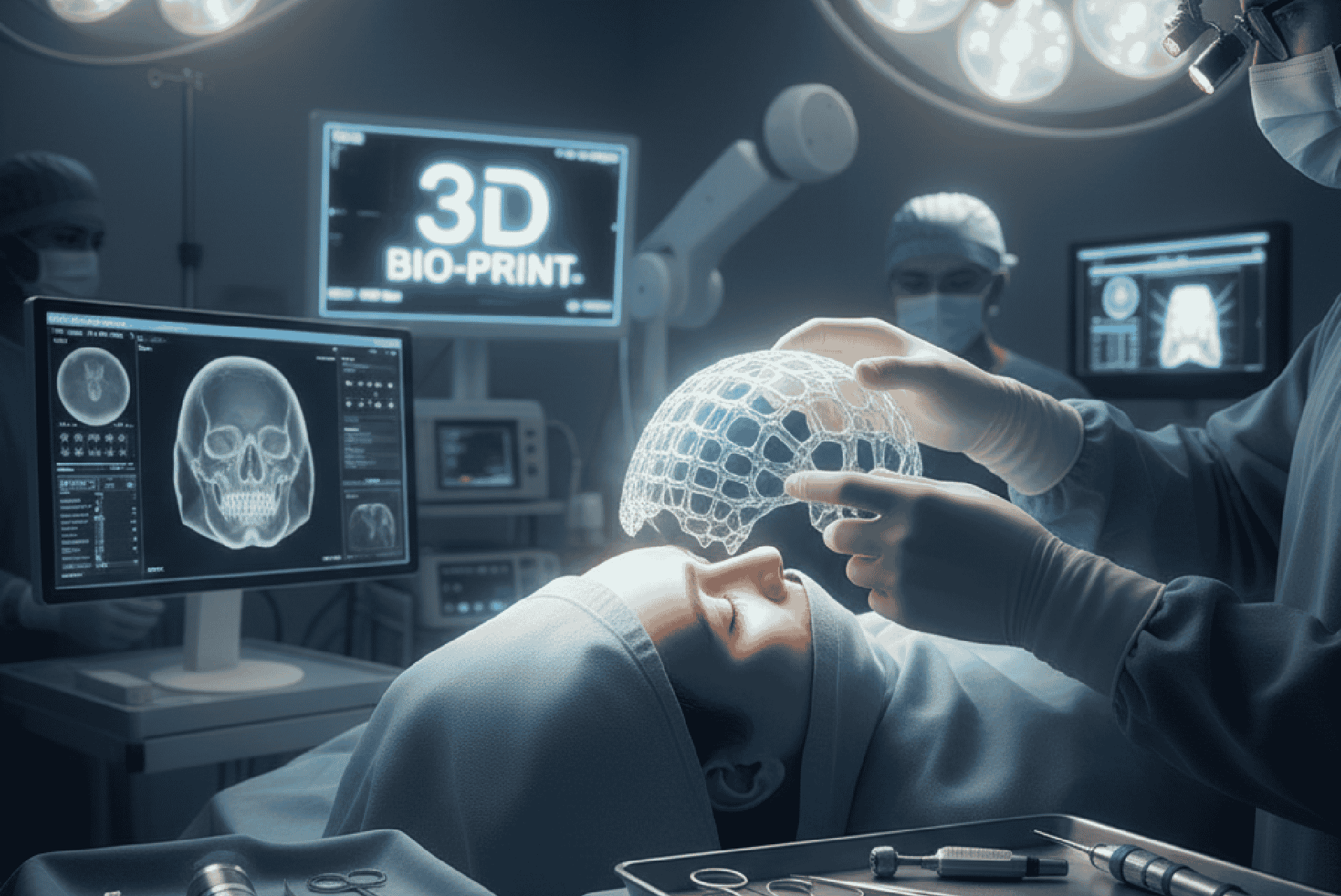




A 19-year-old boy from Nabha, District Patiala, underwent a remarkable surgery at Deep Hospital, Ludhiana, where a 3D printed forehead bone was used to reconstruct his face after a life-threatening cattle gore injury. The patient, who had already endured over six major surgeries, finally saw hope and healing through this innovative procedure.
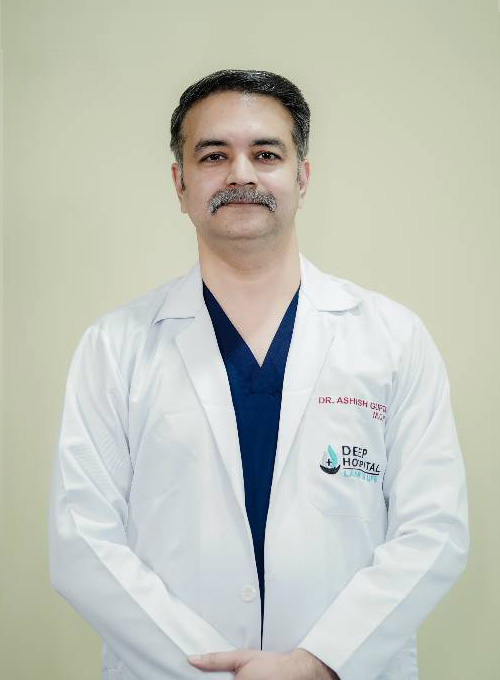
Dr. Ashish Gupta, Director of the Department of Plastic Surgery, explained, “3D printing is a boon for patients with complex defects that are difficult to correct using traditional methods.” By using CT scans of the patient's skull, doctors created a digital model and generated a mirror image of the unaffected side to restore facial symmetry. This custom bone was then printed using advanced 3D printing technology and surgically implanted to achieve a natural-looking result.
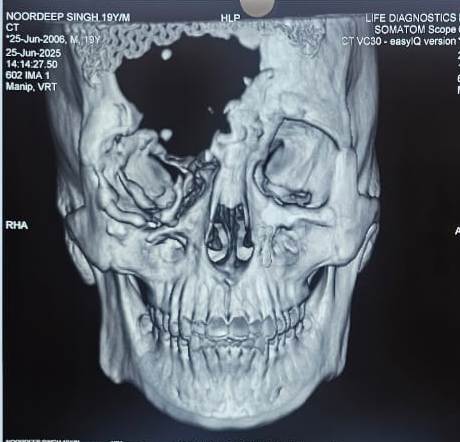
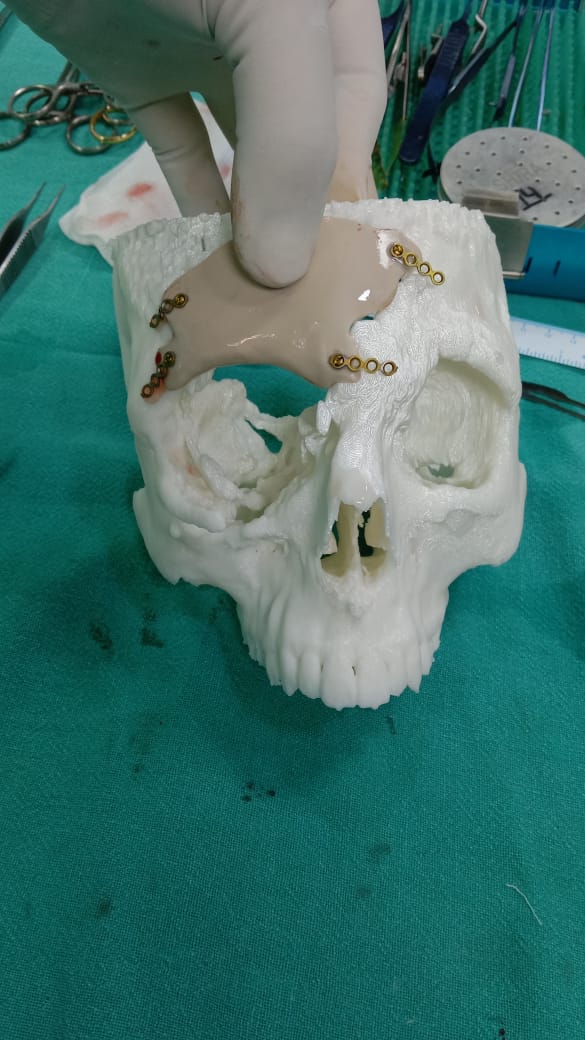
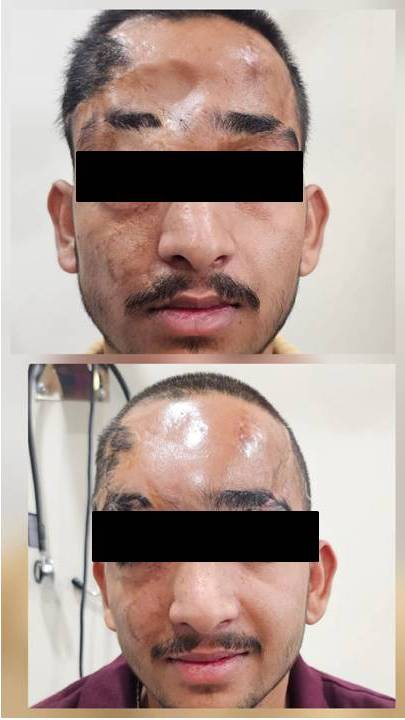
Pre-surgery condition of the patient with severe forehead trauma.
Dr. Gupta also emphasized the evolution in cost-efficiency. “Previously, these Patient Specific Implants (PSIs) were printed in Switzerland, making them expensive. Now, with this technology available in India, the cost has reduced drastically—making life-changing surgeries more accessible to Indian patients,” he said.
Dr. Samarpan Singh, Executive Director at Deep Hospital, highlighted the team effort behind the surgery. The medical team included Dr. R.K. Kaushal (Neurosurgeon), Dr. Abhinav Sharma and Dr. Harjinder Kohli (Anaesthesiologists), along with Dr. Ashish Gupta (Plastic Surgeon). Their coordinated efforts ensured a successful outcome for this critically injured patient.
“We pride ourselves on being among the leading hospitals in the region using cutting-edge technology like 3D printing and robotic surgery,” Dr. Singh added. Such innovation is vital for addressing complex trauma cases where conventional methods may fall short.
This case not only signifies a breakthrough for one patient but also highlights the broader potential of 3D printing in healthcare—especially for trauma, cancer reconstruction, and congenital deformities. Personalized implants mean faster surgeries, better aesthetic outcomes, and improved patient recovery.
This young patient's journey from trauma to transformation is a powerful reminder of how technology can restore not just physical form but also human dignity and confidence. With hospitals like Deep Hospital leading the way, 3D printing is poised to redefine reconstructive surgery in India and beyond.

Did you know Fractional CO₂ laser fades stretch marks and boosts skin confidence.
Explore Now
Did you know expansive role of a plastic surgeon in war?
Explore Now
Did you know that nearly 15 million babies are born prematurely every year?
Explore Now
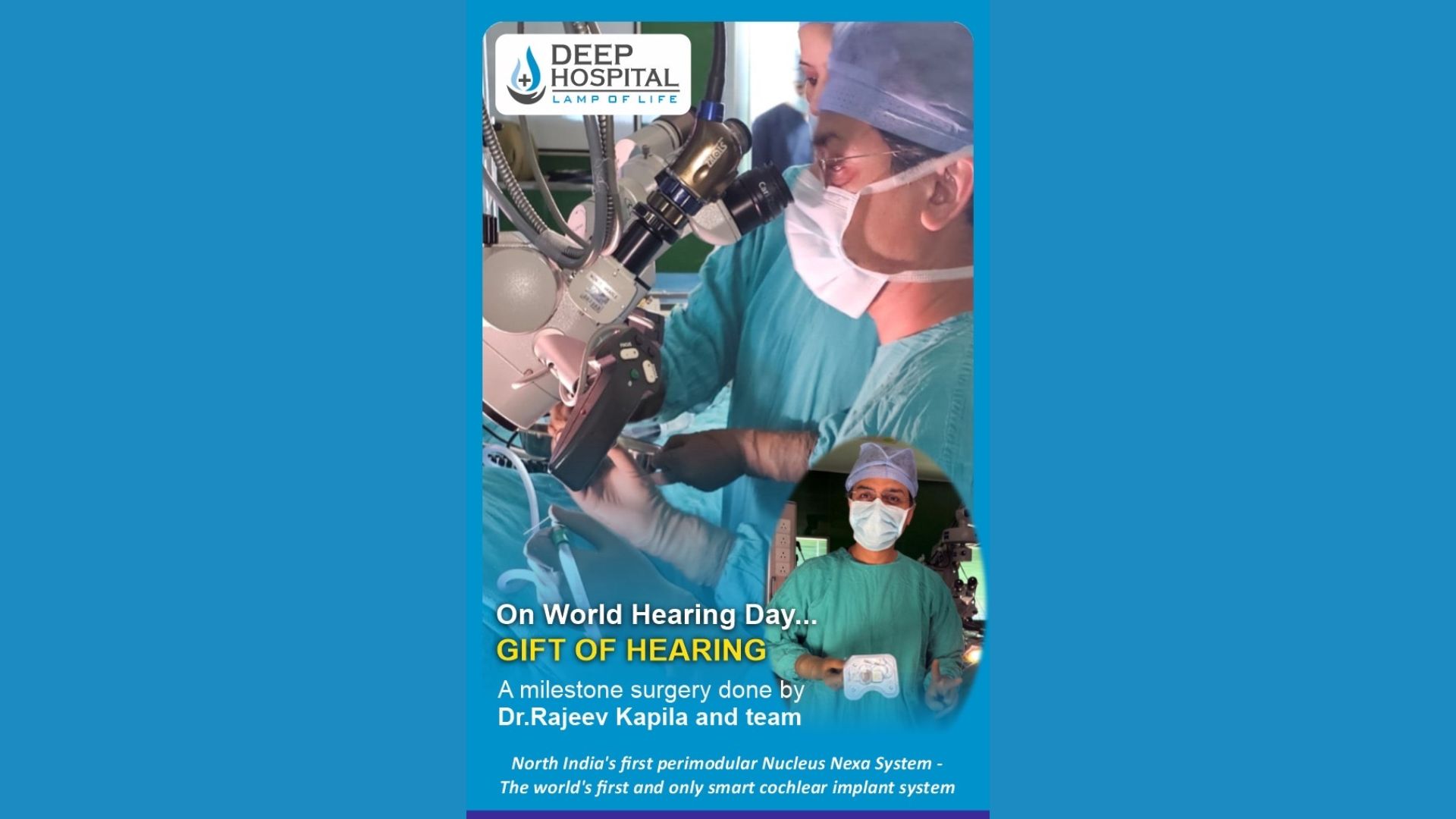
Deep Hospital proudly announces a groundbreaking achievement in hearing restoration as part of its commitment to advanced ENT care. On World Hearing Day, the hospital successfully performed a pioneering cochlear implant procedure using the Nucleus Nexa System, the world’s first and only smart cochlear implant platform. The surgery was expertly conducted by Dr. Rajeev Kapila and his dedicated surgical team, marking North India’s first perimodular implantation of the Nexa System. This milestone reflects Deep Hospital’s continued leadership in offering cutting-edge hearing solutions that transform lives. The Nucleus Nexa System represents a major advancement in cochlear technology, empowering individuals with severe to profound hearing loss to experience clearer and more natural sound. This procedure highlights Deep Hospital’s dedication to innovation, patient-centered care, and excellence in otological surgery. “Bringing the gift of hearing to our patients on World Hearing Day reinforces our mission ,to restore not just sound, but connection, confidence, and quality of life,” says Dr. Rajeev Kapila.
Explore Now
In a landmark achievement for the state's medical community, Punjab's first bilateral cochlear implant surgery using Cochlear SmartNav technology was successfully performed at Deep Hospital, Ludhiana. The highly advanced and intricate surgery was carried out on a two-year-old child by Dr. Rajeev Kapila, a leading expert in cochlear implant procedures, with support from Deep Hospital’s dedicated ENT and audiology team. The child, born with profound bilateral hearing loss, underwent the surgery as part of Deep Hospital’s progressive approach to pediatric hearing restoration. This intervention marks a major step forward in auditory healthcare in the region. The newly adopted SmartNav technology ensures real-time intraoperative feedback, allowing surgeons to achieve highly accurate placement of the electrodes within the cochlea. This precision dramatically improves post-operative outcomes and long-term functionality of the implants. Dr. Kapila highlighted the importance of this development, stating, “This is a proud moment for us and for Punjab's medical fraternity. The SmartNav system enables precise electrode placement, which is crucial for achieving the best possible hearing results after surgery. It enhances the safety and efficiency of the procedure, especially in complex cases like bilateral implantation in very young children.” Dr. Baldeep, Managing Director of Deep Hospital, also praised the effort and the importance of this technological advancement. “This surgery represents hope—a new beginning for children born with severe hearing impairments. Our goal is to ensure that children like this can grow up in a world where sound and communication are a natural part of life.” Following the successful surgery, the child will now begin a structured and personalized rehabilitation program, overseen by Simran Kaur and the experienced cochlear implant team at Deep Hospital. The program will focus on the development of auditory and speech-language skills, which are essential for the child’s social, emotional, and educational growth. The child’s parents expressed deep gratitude to Dr. Kapila and the entire team. They shared their joy at seeing their child take the first step toward a life filled with sound and connection. This milestone not only showcases Deep Hospital’s expertise in advanced surgical techniques but also underlines its leadership in introducing state-of-the-art hearing solutions for children across Punjab and beyond.
Explore Now
Deep Hospital in Ludhiana has made medical history by successfully performing India's first-ever thinnest implant surgery, marking a remarkable breakthrough in advanced healthcare. This pioneering procedure involved the precise implantation of an ultra-thin device to address a complex medical condition that previously posed major challenges for treatment. The ultra-thin implant, engineered using state-of-the-art biocompatible materials, was selected for its minimal size and maximal effectiveness. Such a slender device means reduced surgical trauma, quicker recovery times, and improved long-term comfort for patients. The surgery’s minimally invasive approach illustrates Deep Hospital’s commitment to blending innovation with patient-centric care. A highly skilled team of surgeons and medical specialists collaborated closely in both planning and execution. Leveraging high-resolution imaging, advanced diagnostics, and meticulous surgical techniques, they ensured that the implant was positioned with remarkable accuracy. Throughout the procedure, safety protocols and rigorous hygiene standards were strictly maintained to minimize the risk of complications. The patient who received the implant has demonstrated encouraging signs of recovery, with early improvements in their condition. The seamless post-operative care provided by Deep Hospital's multidisciplinary team further underscores its dedication to holistic health management. Medical experts have praised this successful surgery as a leap forward for Indian medicine, especially for those who have complex conditions requiring innovative solutions previously unavailable in the country. The achievement also opens up new avenues for similarly less-invasive procedures in fields such as orthopedics, neurology, and cardiology. This milestone reinforces Deep Hospital’s status as a leader in embracing and advancing next-generation medical technologies. Their work shines as a beacon of hope for patients who have exhausted conventional treatments or are in need of sophisticated interventions. With ongoing research and continuous adoption of novel techniques, the hospital remains committed to raising standards and expanding possibilities for patient care in India. Ultimately, India’s first thinnest implant surgery is not just a moment of institutional pride, but also a source of hope and progress for countless patients facing intricate health challenges across the nation.
Explore Now
Stay up to date with our news and events by signing up to our newsletters.
By clicking this button, you agree to receive newsletters and updates from us